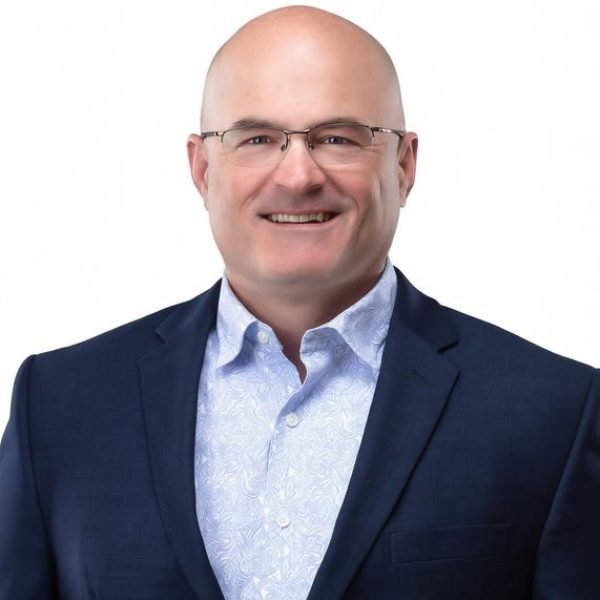
Dan Jarvis is a man who has lived at the edge of human endurance—and returned with a map for others.
Raised in a Navy family, service was woven into his life from an early age. Dan chose his own path of service in the United States Army, where he served as an Infantryman, deploying to combat environments that demanded discipline, resilience, and leadership under extreme stress. His time in uniform shaped his understanding of teamwork, responsibility, and the psychological toll carried by those who operate in high-risk professions.
After leaving the Army, Dan continued his commitment to public service in law enforcement, joining the Polk County Sheriff’s Office. There, he served on the Crime Suppression Team (CST), working narcotics and criminal investigations—a role that placed him daily at the intersection of violence, trauma, addiction, and human suffering. This dual background—combat arms and frontline law enforcement—gave Dan a rare, firsthand understanding of cumulative trauma across both military and civilian domains.
No. TRP is designed to work without reliving the story, it’s actually not allowed.
Most clients complete 2–5 sessions, depending on stress load and goals.
TRP is a structured resiliency protocol focused on reducing nervous system stress. If you inform us of a clinical diagnosis we must pause until your medical professional signs off approving us to work with you in efforts to compliment their work. We will provide you with the form necessary.
Perfect. TRP works for everyday stress, anxiety, and emotional overload, not just major events.
You feel steady. You handle stress without spiraling. Your body isn’t on edge all day. You trust yourself again—and life feels open, not threatening.
Dan Jarvis is a man who has lived at the edge of human endurance—and returned with a map for others.
Raised in a Navy family, service was woven into his life from an early age. Dan chose his own path of service in the United States Army, where he served as an Infantryman, deploying to combat environments that demanded discipline, resilience, and leadership under extreme stress. His time in uniform shaped his understanding of teamwork, responsibility, and the psychological toll carried by those who operate in high-risk professions.
After leaving the Army, Dan continued his commitment to public service in law enforcement, joining the Polk County Sheriff’s Office. There, he served on the Crime Suppression Team (CST), working narcotics and criminal investigations—a role that placed him daily at the intersection of violence, trauma, addiction, and human suffering. This dual background—combat arms and frontline law enforcement—gave Dan a rare, firsthand understanding of cumulative trauma across both military and civilian domains.
He later earned a Master of Public Administration, equipping him with the strategic, organizational, and leadership foundation needed to build systems—not just survive within them.
When his service roles ended, the war did not.
Like countless high-performing professionals carrying invisible wounds, Dan faced a personal reckoning with trauma, grief, and despair that nearly cost him his life. On March 2, 2013, he reached a breaking point—and then made a decision that would quietly change the lives of thousands.
He chose to live.
And then, to build.
Disillusioned with systems that required people to relive their worst moments in order to heal, Dan began asking a different question:
What if trauma could be resolved—without being re-experienced?
That question became the catalyst for everything that followed.
In 2018, Dan co-founded 22Zero alongside his then-wife, Dr. Gwinnell Brant, with a shared mission to end veteran and first responder suicide and radically improve how trauma is addressed. Dan focused on developing rapid, non-invasive, peer-driven approaches that could meet veterans and first responders where they were—without clinical dependency, medication, or prolonged exposure therapy.
Through this work, Dan helped develop what would later become the Trauma Resiliency Protocol (TRP) and the Emotions Management Process (EMP)—methods designed to calm the nervous system, neutralize emotional overload, and restore self-regulation without requiring individuals to relive traumatic events. These approaches have since helped thousands regain clarity, stability, and hope and are now patent pending.
In 2024, Dan founded Healing the Hero, a nonprofit Christian ministry dedicated to breaking the cycle of trauma and suicide among veterans, first responders, active-duty service members, Gold Star families, and their loved ones. At its core is a simple but radical belief:
Healing is not only possible—it can be fast, humane, and lasting.
Through Healing the Hero, Dan introduced his most refined work to date: the Trauma Resiliency Protocol–Peer Rescue (TRP-PR) and the Jesus Protocol—precise, peer-led frameworks that help individuals neutralize emotional overload in minutes. These approaches are currently undergoing scientific validation through brain-imaging and heart-rate-variability research in partnership with Arizona State University and other academic institutions.
Early results are compelling.
A major pilot study involving law-enforcement officers demonstrated significant reductions in PTSD symptoms, anxiety, and depression—often within one to three sessions—without participants reliving traumatic events. The findings point toward a scalable, human-centered solution to one of the most urgent mental-health challenges facing military and public-safety communities today.
Dan’s work has drawn national attention through award-winning documentaries, television appearances, and more than 50 podcast interviews, including films and media projects examining post-9/11 trauma, veteran recovery, and first-responder resilience. Across every platform, one theme remains constant: quiet credibility rooted in lived experience.
Yet for Dan, the mission is deeply personal.
In 2021, he adopted Maze, a service dog who once belonged to a fellow veteran who died by suicide. Their bond is a daily reminder of what is at stake—and why this work cannot fail.
Today, Dan Jarvis stands at the intersection of lived hardship, innovation, faith, and service. He is not driven by theory, trends, or titles, but by a conviction forged in the darkest moments of his own life:
Healing is possible. I know—because I’ve lived it. And every hero deserves the chance to heal fully, freely, and for good.